
BME Lecture Series: Michelle Chang, UC Berkeley
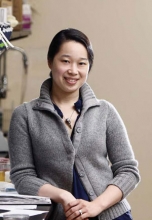
Associate Professor
Department of Chemistry
Department of Molecular and Cell Biology
Abstract: Living systems have evolved the capacity to carry out many chemical transformations of interest to synthetic chemistry if they could be redesigned for targeted purposes. However, our ability to mix and match enzymes to construct de novo pathways for the cellular production of small molecule targets is limited by insufficient understanding of how chemistry works inside a living cell. Our group is interested in using synthetic biology as a platform to study how enzymes function in vivo and to use this understanding to build new synthetic pathways for the production of pharmaceuticals, nanomaterials and fuels using living cells.
Bio: Chang is an associate professor at UC Berkeley in the departments of chemistry and molecular and cell biology. She received her Ph.D. from MIT's Department of Chemistry and her postdoctoral training in the Department of Chemical & Biochemical Engineering at UC Berkeley. Her research group works at the interface of enzymology and synthetic biology, with a focus on studying biological fluorine chemistry, formation of mixed-valent nanomaterials by directional-sensing bacteria, and processes involved in developing synthetic biofuel pathways. She has received the Dreyfus New Faculty Award, TR35 Award, Beckman Young Investigator Award, NSF CAREER Award, Agilent Early Career Award, NIH New Innovator Award, DARPA Young Faculty Award, Camille Dreyfus Teacher-Scholar Award, 3M Young Faculty Award, Arthur C. Cope Scholar Award, and Pfizer Award in Enzyme Chemistry.
Share

Upcoming Events
-
CBE 298 Seminar: Coffee as a Platform for Experiential Chemical Engineering Education: From Qualitative Design to Quantitative Analysis
-
EECS Seminar: Printed Electronic Skin for Robots and Interactive Systems
-
MSE 298 Seminar: Illuminating Microstructure-Dependent Binding and Delivery of Nucleic Acids via Gradient Copolymerization and Field Flow Fractionation
-
MSE 298 Seminar: Illuminating Microstructure-Dependent Binding and Delivery of Nucleic Acids via Gradient Copolymerization and Field Flow Fractionation