
CBE Distinguished Lecture/CBE 298 Seminar: Computational Design of Peptides as Detectors, Sensors and Drugs
Chemical and Biomolecular Engineering
Abstract: We describe our efforts to develop an efficient computational algorithm that searches for peptides that bind strongly and selectively to specific biomolecular targets, and to use that algorithm in the design of peptide-based detectors, sensors and drugs. The algorithm, PepBD, is an iterative procedure that involves as many as 100,000 sequence mutation moves and/or peptide backbone conformation moves to arrive at the peptide sequence and conformation that has the lowest binding energy to the target. The top scoring peptides are then further evaluated by performing explicit-solvent atomistic simulations of the peptide–target complex to determine their binding free energies. We describe the application of this method to three projects: design of peptides to bind to Cardiac Troponin I, a heart attack biomarker; design of peptides to block the action of the toxins secreted by C- difficile bacteria in the large intestine; and design of peptides to capture specific microplastics in the environment .
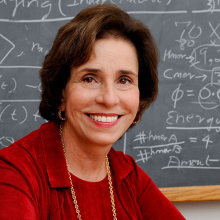
Bio: Professor Carol K. Hall is the Worley H Clark, Jr, Distinguished University Professor of Chemical and Biomolecular Engineering at North Carolina State University. She received her bachelor's degree in physics from Cornell University and her doctorate in physics from the State University of New York at Stony Brook. After postdoctoral training in the chemistry at Cornell and a brief period as an economic modeler at Bell Laboratories, she joined the Chemical Engineering Department at Princeton University in 1977 as one of the first women to be appointed to the chemical engineering faculty in the U.S. In 1985 she joined the Chemical Engineering Department at North Carolina State University. Hall’s research focuses on applying statistical thermodynamics and molecular-level computer simulation to topics of chemical, biological or engineering interest. Current research topics include protein aggregation, multipolar colloids, peptide design and remediation of microplastic pollution. The author of over 325 publications, she is a recipient of the AIChE 2015 Founders Award, the 2019 John M Prausnitz Award from the PPEPPD Thermodynamics Conferences, and 2020 AIChE Margaret Hutchinson Rousseau Pioneer Award for Lifetime Achievement by a Woman Chemical Engineer. She is a fellow of the American Institute of Chemical Engineers, American Physical Society and American Association for the Advancement of Science. Hall was elected to the National Academy of Engineering in 2005 and served as its Home Secretary from 2019 to 2023.
Share

Related Content
| Attachment | Size |
|---|---|
| 810.96 KB |
Upcoming Events
-
CBE 298 Seminar: Coffee as a Platform for Experiential Chemical Engineering Education: From Qualitative Design to Quantitative Analysis
-
EECS Seminar: Printed Electronic Skin for Robots and Interactive Systems
-
MSE 298 Seminar: Illuminating Microstructure-Dependent Binding and Delivery of Nucleic Acids via Gradient Copolymerization and Field Flow Fractionation
-
MSE 298 Seminar: Illuminating Microstructure-Dependent Binding and Delivery of Nucleic Acids via Gradient Copolymerization and Field Flow Fractionation