
Naomi Chesler Receives $4.9 Million NIH Grant for Right Ventricular Failure Research
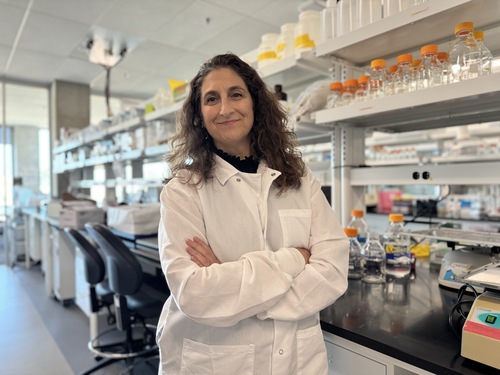
July 16, 2026 - The lifetime risk for heart failure in the United States is 24 percent, and that risk is growing. Historically right ventricular failure, where the right side of the heart loses its ability to effectively pump blood to the lungs, has been understudied with clinical research focusing primarily on the left.
UC Irvine Chancellor's Inclusive Excellence Professor Naomi Chesler has been awarded a $4.9 million grant from the National Institutes of Health to continue her research into RVF using
Chesler is a UCI professor of biomedical engineering and the director of the Edwards Lifesciences Foundation Cardiovascular Innovation and Research Center which leads synergistic and interdisciplinary research in cardiovascular science and engineering
Their RVF research has three primary aims:
Aim 1: Mapping Metabolic Dysfunction in RV Failure In Vivo
First, the researchers are striving to determine the causes and consequences of metabolic dysfunction in RV failure in living subjects. They are studying how pressure overload — the intense physical strain placed on the heart when it has to pump against high resistance — triggers mitochondrial energetic derangement, a breakdown in
Aim 2: Translating Cellular Mechanics to Human Disease
Second, they will study the direct link between organelle and tissue-level dysfunction in myocardial samples from both humans and rats in vitro. They will assess how well the heart muscle tissue generates force and power under different energy conditions by varying the levels of the tissue’s key energy molecules: ATP, ADP, and Pi.
The team will
Aim 3: Building the Multiscale Virtual Heart
Lastly, they are developing computational models that incorporate their findings in coupled myocardial metabolism and mechanics. These computer simulations will integrate the key pathways of cardiac energy and mechanics to predict dysfunction at every level — from the subcellular level to the whole organ. These simulations will test the researchers’ theories about metabolic effects on myocardial tissue and ventricular mechanical function.
This
- Natalie Tso
