Eleven Senior Projects Win Dean's Choice Awards at 2026 Annual Design Review
March 30, 2026 - The entire first floor of the UC Irvine Student Center buzzed with excitement at the Samueli School of Engineering's Annual Design Review on Friday, March 13. Over one thousand attendees and over 230 student team projects spanned across eight rooms.
Fourth-year engineering students had an opportunity to design creative solutions for real-world problems during this annual senior design program. Most students can spend up to two quarters working in teams on their project, designing, creating, building and researching complex ideas that they then demonstrate to a wider audience at Design Review. Students were given the opportunity to practice their presentation and networking skills, as they shared their projects with alumni, industry professionals, faculty, fellow students and staff.
Faryar Jabbari, the new interim dean of engineering and professor of mechanical and aerospace engineering, welcomed attendees and kicked off the event. He urged students and attendees to have a good time. “Walk around to see your peer’s projects and ask hard questions You’ve done good work, now enjoy yourselves.”
Over 100 industry professionals registered for the event. Marta Graham, an industry representative from RTX Corporation, was in awe of the student work. She attended to support research and because RTX is interested in forming partnerships with UCI engineering students who will be graduating.
“I’m just so impressed,” Graham said. “The students are so high caliber and innovative. I haven't seen the same thing twice.”
In one of the rooms down the hall from the senior design projects, an Autonomous Rover Competition spurred friendly rivalry between freshman teams. The first-year engineering students displayed cleverly named rovers that they designed and built to operate without external control. The rovers were required to follow a track, then use a claw mechanism to pick up a cup off the floor. Cookie Monster and frog-themed rovers brought youthful energy to the otherwise impressive, timed competition.
Team Mission Inclawsible, with members Aashika Ansu, Kushagra Goel, Anay Kamboj, Shashank Sanigepalli, Elan Wan and Caden Wei were awarded first place in the competition, as their rover successfully completed the track in 23.44 seconds. Team 10 Yen, with students Miles Dix, Ethan Kim, Gavin Lee, Noah Mirkay, William Quan and AJ Ransweiler, earned second place as they finished just four milliseconds behind the winning team.
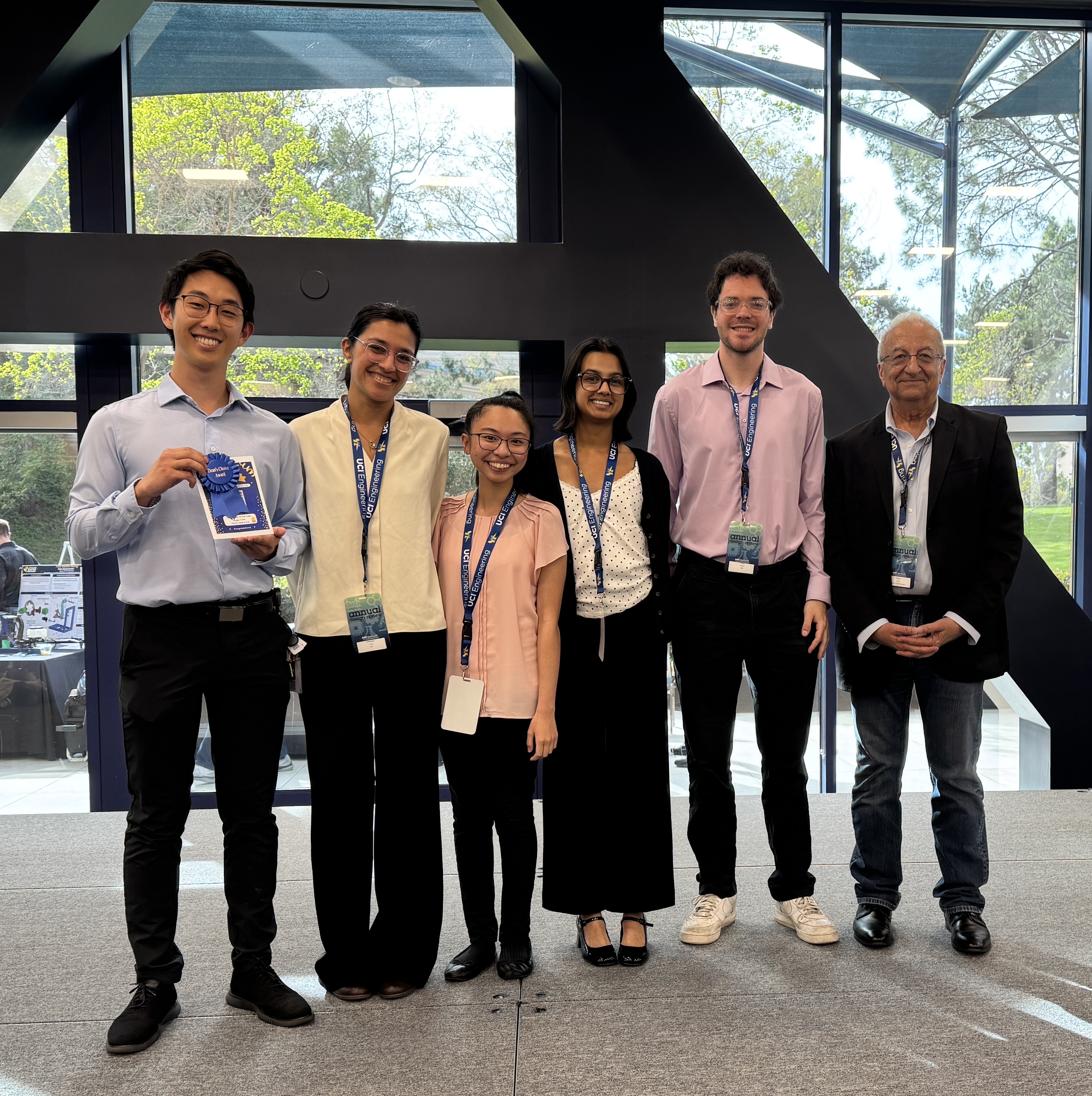
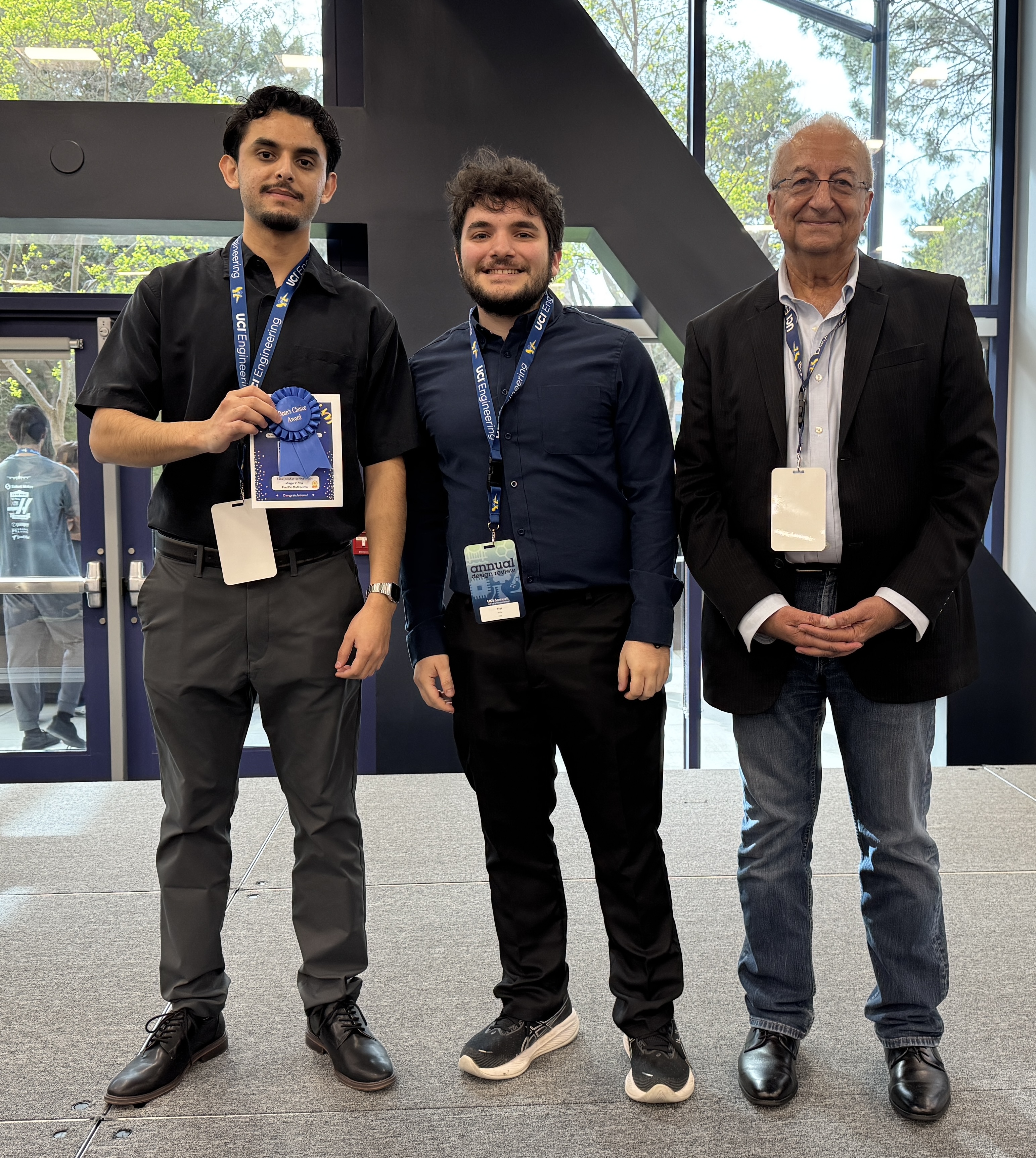
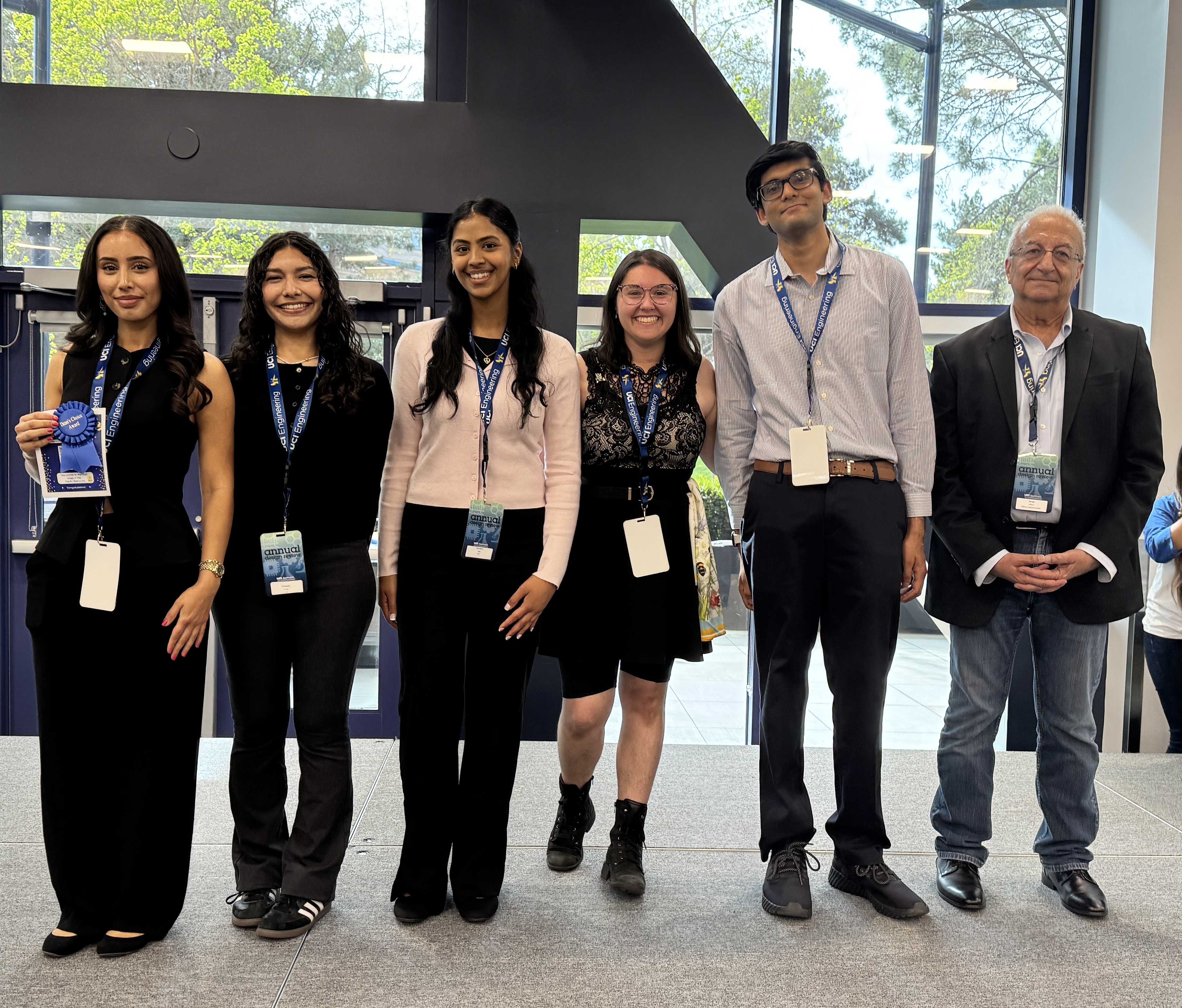
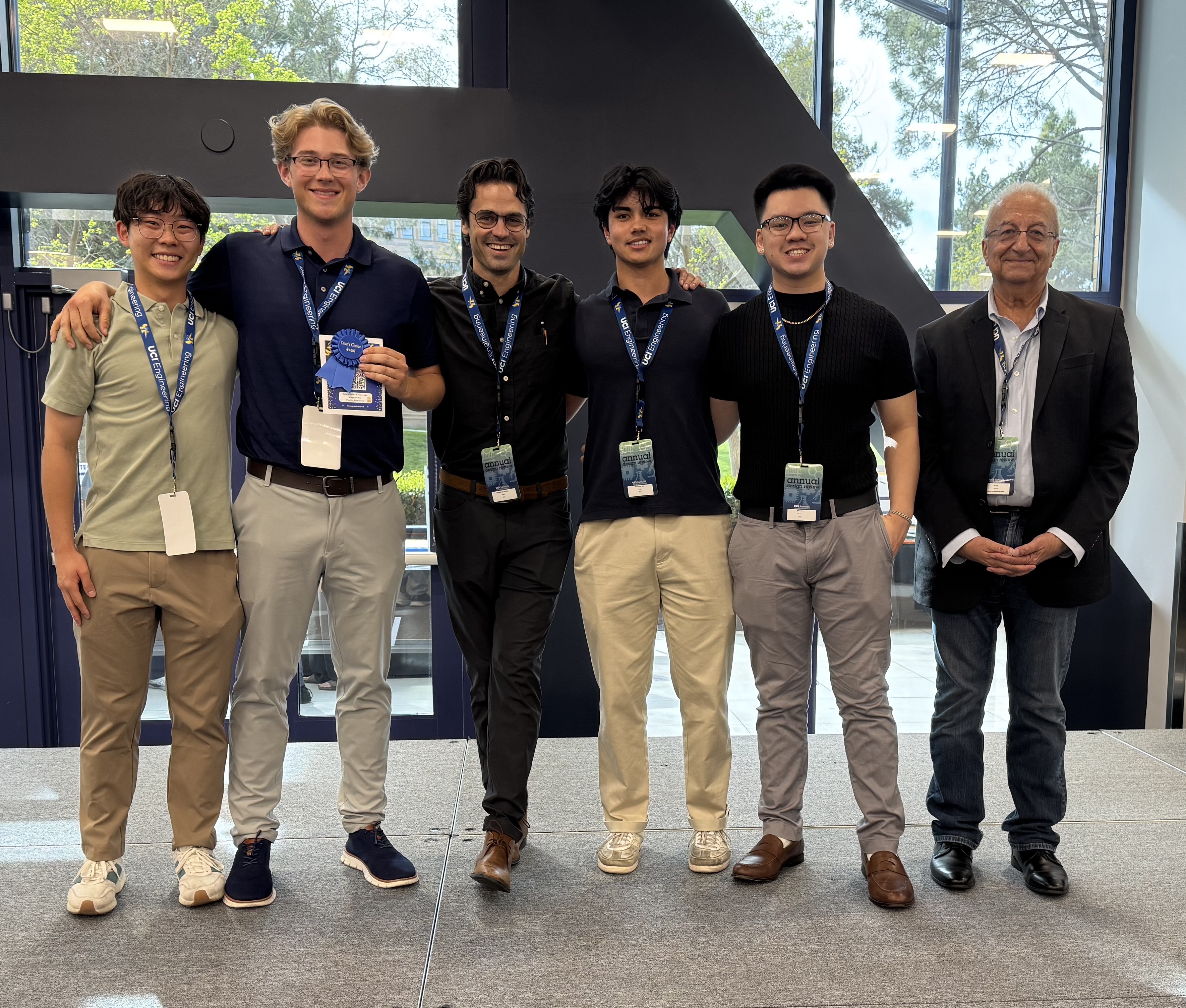
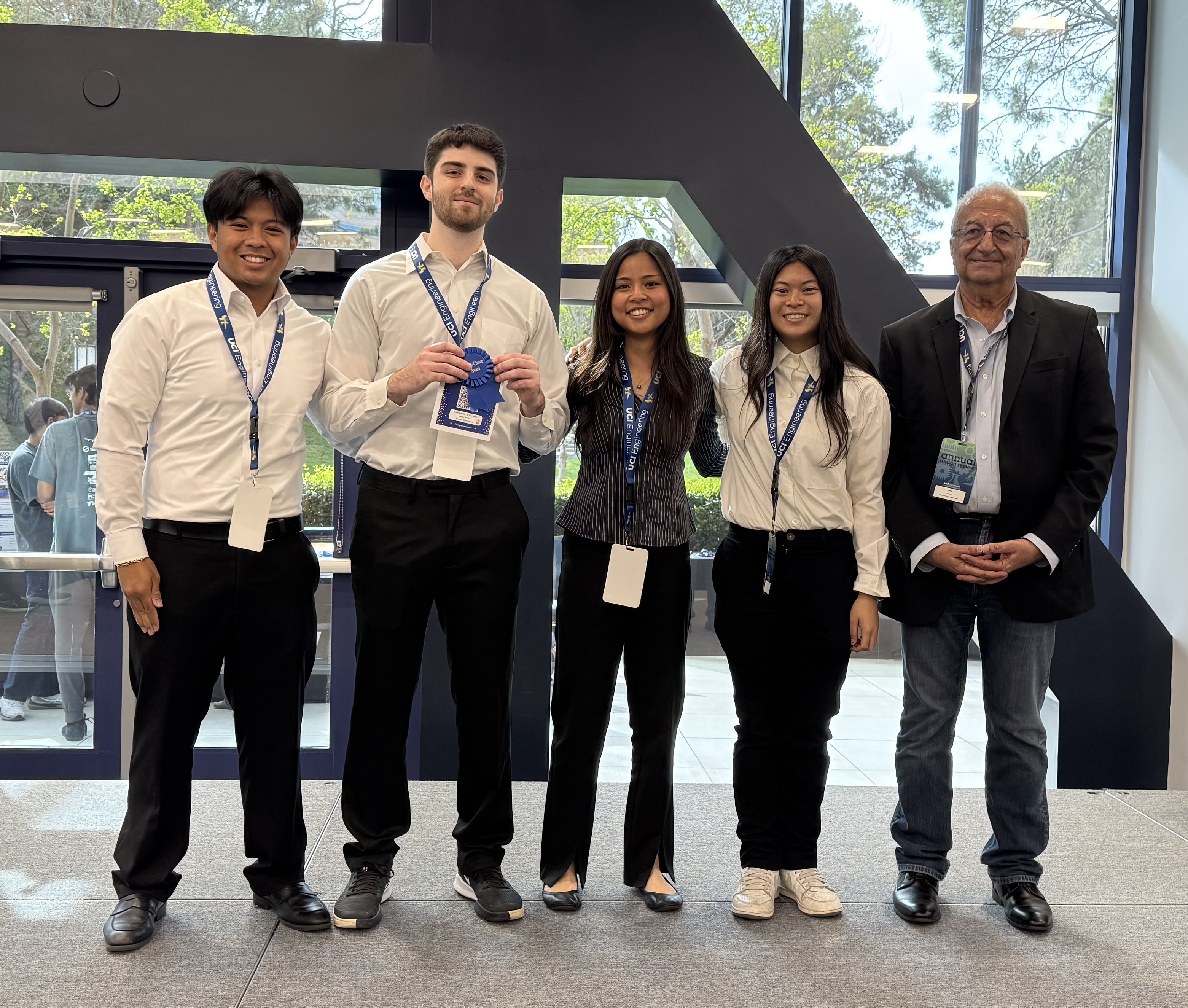
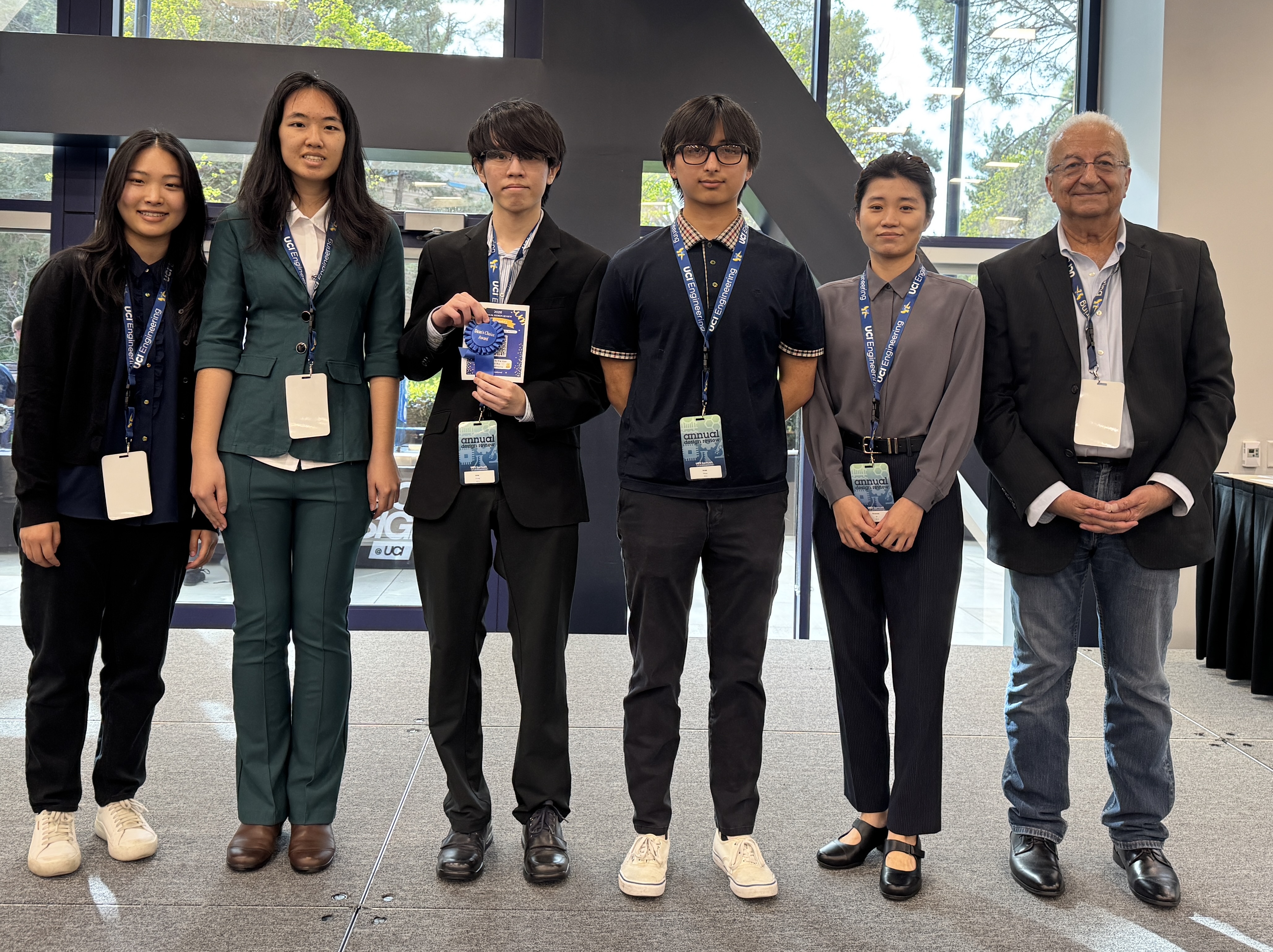
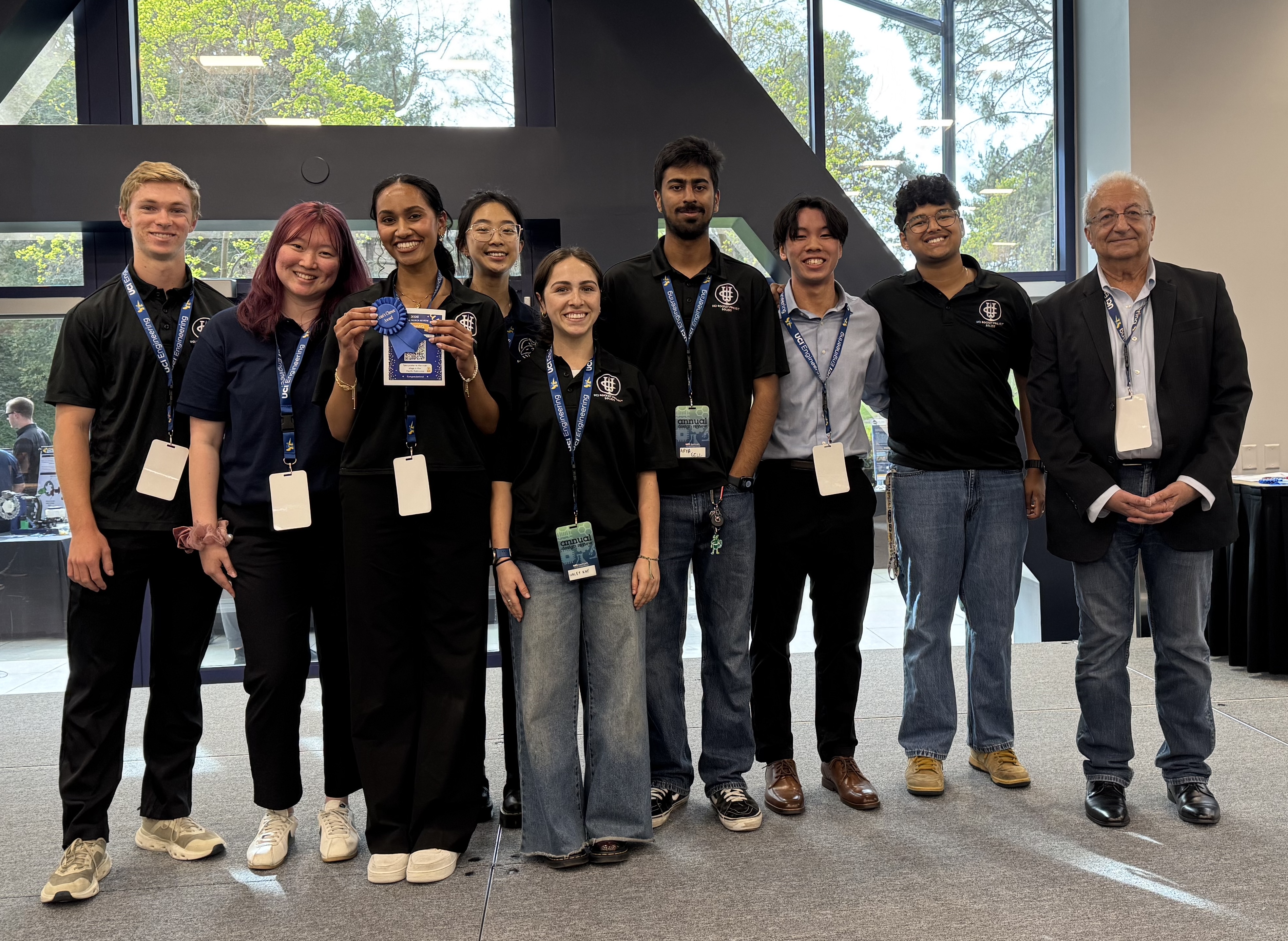
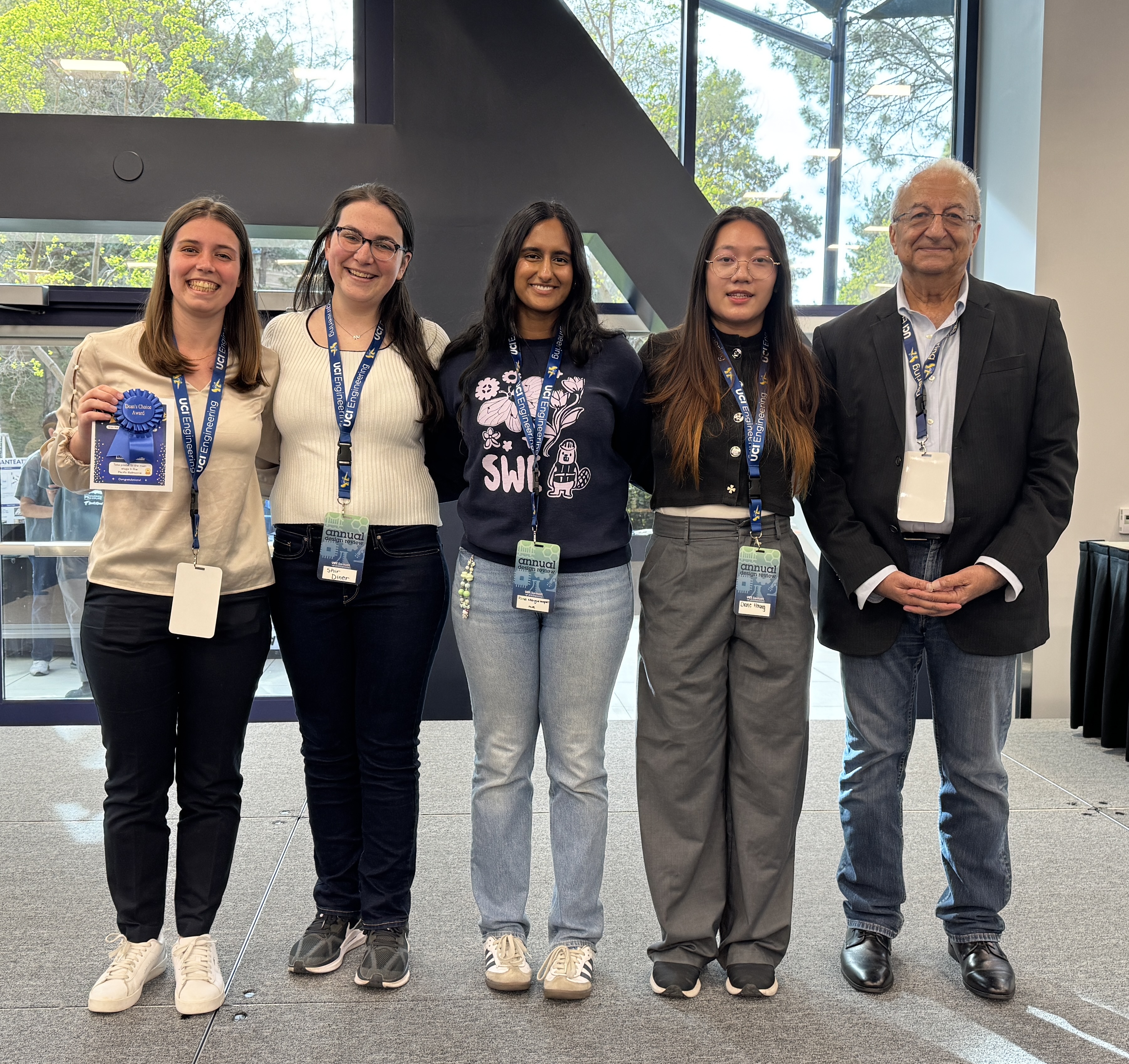
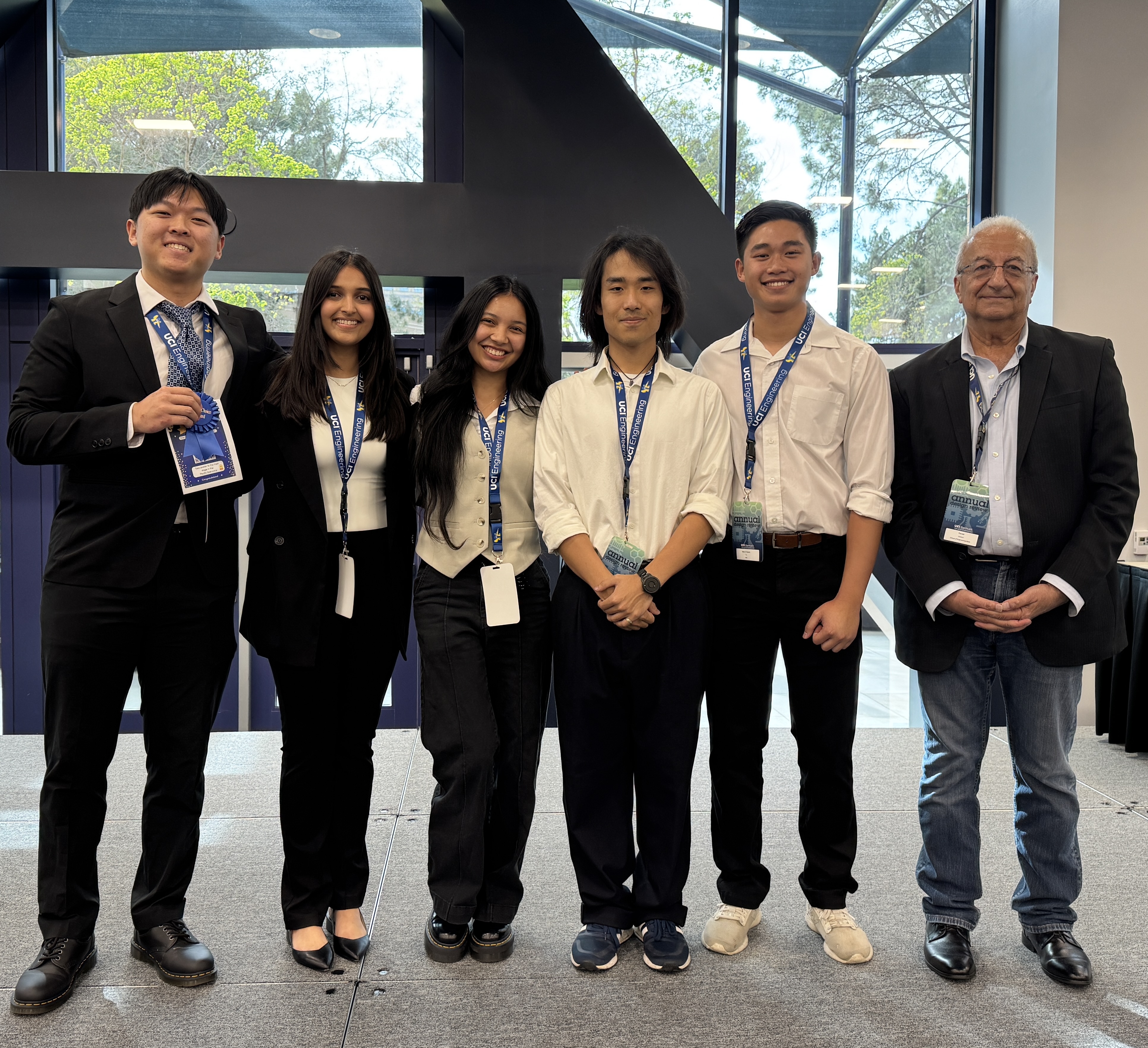
The three-hour event ended with the announcement of the Dean’s Choice Awards. Of the 27 nominations, 11 projects were recognized. The interim dean and a team of graduate student judges selected the winners based on the following criteria: if the project solves an important problem, if it is practical and if it has a “wow” factor. This year, Jabbari also judged the teams based on the enthusiasm of the presenters and the audience. Below are this year’s Dean’s Choice Award winners.
BIOMEDICAL ENGINEERING
NeoFusion
This team, called Neovi, was recognized for their fully mechanical syringe pump that addresses neonatal mortality in low-resource countries with unreliable electricity or infrastructure. Their product, NeoFusion, does not require electricity and is driven by the energy of a spring.
Team members: Christopher Tan, Keerthana Anand, Aditi Ranabhor, Kevin Gurney, Sarah Liu
UCIMC Cervical & Fetal Monitoring
Students in this team proposed a noninvasive urinary catheter compatible with an ultrasound transducer to measure cervical dilation from within the bladder of a pregnant person, rather than the traditional manual cervical exam, which, after researching, they found could lead to infections and likelihood of C-section deliveries.
Team members: An Tran, Anthony Istaphanous, Lucas Jones, Dathan Nguyen, Joshua Varela, Isaac Torosian
CHEMICAL AND BIOMOLECULAR ENGINEERING
A Dual Tanks-in-Series Model for Non-Ideal CSTR Hydrodynamics
This team won for their experiment that addresses the optimization of chemical reactions in stirred tank reactors, an important step in optimizing reaction conditions. This aids in the sustainability and efficiency of chemical processes, as well as lowering production method costs. Students described the wow factor of this project to be the potential applications of their findings in pharmaceuticals, textiles and water treatment industries.
Team members: Angel Huante, Miriam Serfezeu, Kaitlyn Pak, Amoli Vanavadiya, Malik Thiaw
CIVIL AND ENVIRONMENTAL ENGINEERING
E5 Quantifying Removal of Selenium by Aquatic Plants via Methylation & Volatilization in San Joaquin Marsh
Students in this project were recognized for their research in studying the emerging concern of contaminants like PFAS, or per- and polyfluoroalkyl substances known as forever chemicals, in the San Joaquin Marsh.
Team members: Elizabeth Zarate, Jasmin Jalali, Roselene Ujagar, Sophia Koelsch, and Jai Badal
ELECTRICAL ENGINEERING AND COMPUTER SCIENCE
Photon Flight
This project investigated how to maintain reliable drone operations in GPS-denied or radio frequency-compromised environments during disaster responses. Students in Photon Flight won due to their design and build-out of a drone connected to a fiber optic tether, which enabled secure and high bandwidth communication.
Team members: Nate Johnson, Nicholas Kai Brega, Desmond Patrick Bolia, Julius Yang, Mervin Nguyen
EMG-Controlled Prosthetic Hand
The team designed a prosthetic hand controlled by electromyographic signals triggered from the user’s muscles. Their device addresses health care challenges and aligns with their efforts to improve accessibility and offer reliable rehabilitation technologies.
Team members: Nicholas Ward, Alessandria Mira Vega, Antonio Samonte Velasco, Vy Ngoc Huynh
Wireless Drone Charging Station
Students in this team designed an autonomous landing platform that wirelessly recharges drones via resonant inductive power transfer, a wireless charging technology, which allows for extended and potentially continuous drone operations.
Team members: Joey Chang, Ruiyuan Ke, Isaac Meyer, Savannah Nguy, Theresa Wang
MECHANICAL AND AEROSPACE ENGINEERING
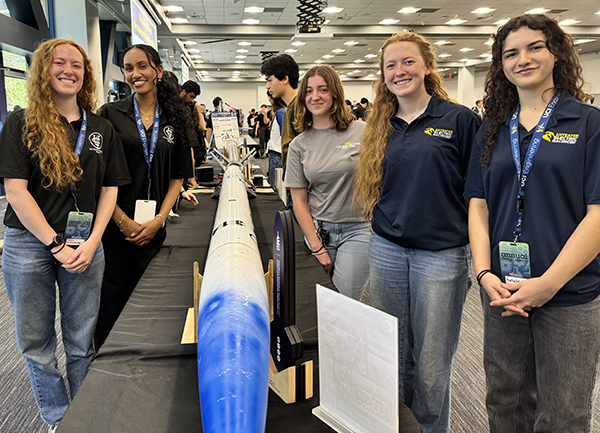
UCI Rocket Project Solids
Members of the annual project produce a new rocket every year. This year, the students implemented air brake systems in the rocket, producing the university’s first in-flight control system within a solid rocket. The rocket is equipped with inertial measurement units and radio frequency telemetry that keeps students connected to it during the flight. This process mimics the technology seen in rovers deployed on Mars.
Team members: Deon Nguyen, Arya Gill, Daniel Li, Yuta Yogi, Arvin Nguyen, Jayden Tran, Brady Cason, Frank Yeh, Jesus A. Robles, Hector Rodriguez, Adrian Pascua, Alan Shiah, Shikhar Sahaai, Harish Kanna, Rebecca Hong, Haley Kay, Nishali Desai, Jack T. Ishibashi, Aaron Sato, Jonathan Furumizo, Kendall VanDenburgh, Manny De Leon, Vaishnavi Suresh, Leilani Zagross, Sean Liem, Antoine Nguyen, Phivan Quach Nguyen, Ian Crawford, Erin Lee, Brian Van, Yara Shakhshir, Berenice Santos, Pratyush Verma, Ian Tapia, Savannah Banks, Yuki Matsuoka, Hannah Kim, Savannah Banks, Eric Sun
Drone Magnetic Deployment System
Students in this team, called the Mag‑Vengers, were partnered with local defense company Design West Technologies to design and develop a compact, energy efficient system that can remotely release sensor pucks during high-speed flights. Their approach was ato replaced the traditional use of mechanical release mechanisms with an electro-permanent magnet drone deployment system.
Team members: Shir Diner, Emma Bernadin, Diane Hoang, Mrinalini Mangalampalli
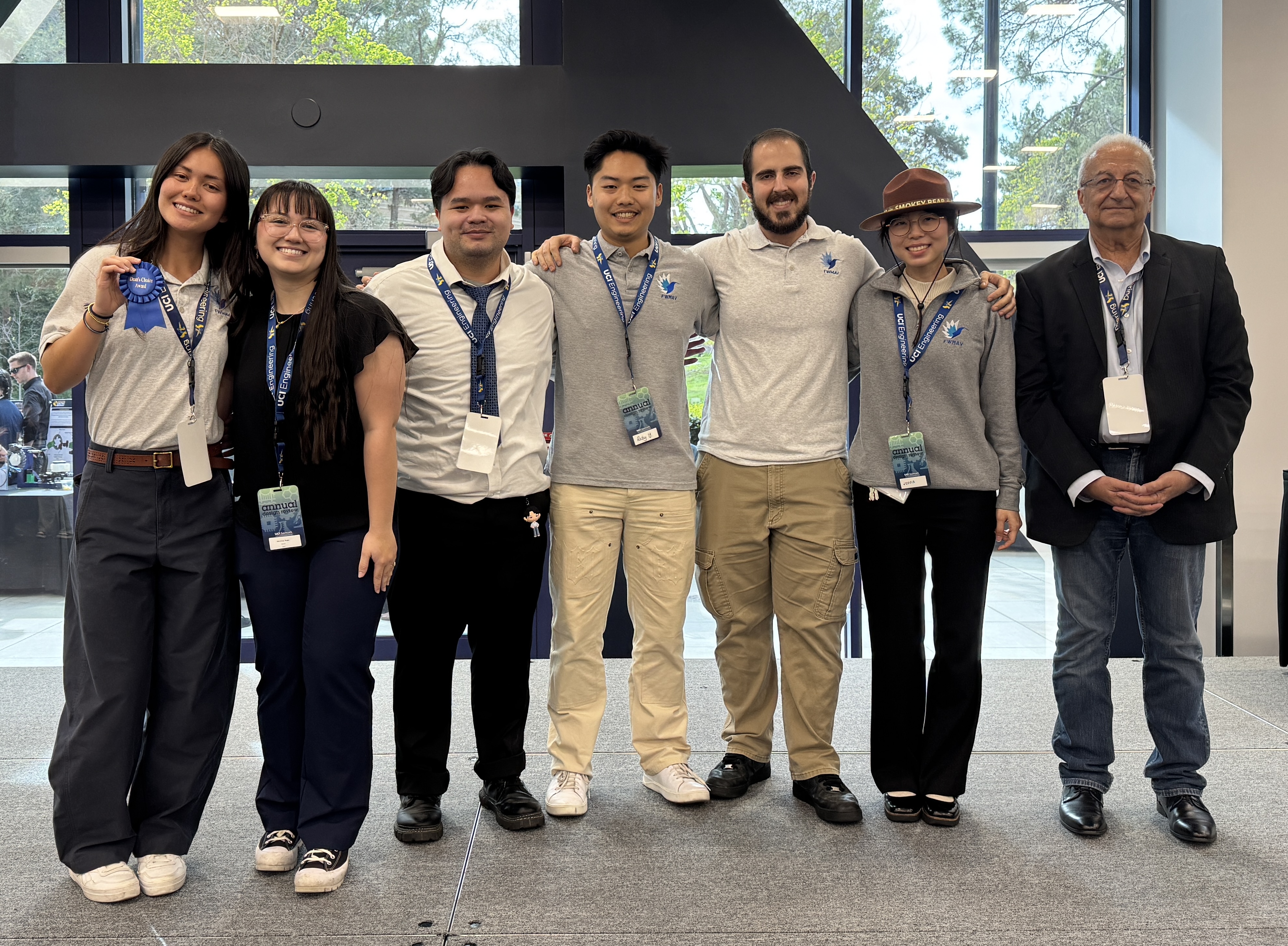
Flapping Wing Micro-Air Vehicle
This team won for their unique approach to their drone’s flight mechanism, which replicates the flapping motion of hummingbirds and insects. Students were able to achieve the flapping flight technique through Single Wing Flapper and X-Wing Quadflapper designs that use wing movements. The drone’s low profile and high-performance maneuverability give it the advantage of going where traditional drones may not be able to go.
Team members: Brian Truong, Daniel Grivennikov, Mylie Yu, Vanessa Salyer, Nour Ammari, Ricky Yoshida, Vincent Nguyen, Hambik Margoosian, Joshua Elvis Rodrigues, Dante Masci, Kshitij Anand Andrew Le, Hayden Harrison, Omar Najjar, and Rene Urrea, Sophia Sweeney, Matthew Kaiser and Thomas Ibrahim, Jenna Lee, Derek Zuo, Joshua Varela
MATERIALS SCIENCE AND ENGINEERING
High Performance Dental Ceramics Through 3D Printing
Students who worked on this project presented their findings on how to create customizable, 3D-printed dental ceramics for crowns that can be produced in just one day. By forgoing the traditional route of using Digital Light Processing 3D printing for customized dental ceramics, students instead opted for high solid loading glass-ceramic slurries, or dense mixtures of glass-ceramic particles suspended in a liquid.
Team members: Alyssa Bongolan, Daryl Vu, Khushi Dave, Nathan Cheng, Junho Choi, Gabriel Reginato, Megan Huynh, Yumeng Xu, Derek Lublin, Hrishikesh Kamat
– Cassandra Nava