
MSE 298 Seminar: “You Can’t 3D Print That” as an Inspiration for New Technologies
Abstract: For this discussion, we would like to share our approaches and results toward creation of 3D printing (3DP) materials as well as access to materials combinations that have generally been “unprintable.” Key examples include photothermal vat-like 3DP with silicone thermoset elastomers; combinations of metals and organics from a single, homogeneous liquid resin vat; bicontinuous composites inside of opaque foams; and multicolor parts from vat photopolymerization with only a single resin source. In some of our approaches, our goals are to discover and introduce new chemical modalities into the 3DP ecosystem. Examples include orthogonal chemical reactivities within organic materials as well as photoredox catalysis to enable production of metallic domains from liquid precursors. In other scenarios, our curiosities have been driven by applications-oriented needs, such as the ability to print inside of existing opaque structures or to achieve three-dimensional geometric freedom without changing the chemistry of decades-old legacy materials.
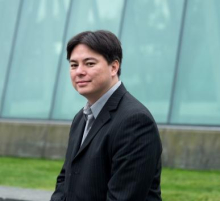
Bio: Boydston began studying chemistry as an undergraduate at the University of Oregon under the guidance of Michael M. Haley. His research focused on the synthesis and study of dehydrobenzoannulenes. After completing bachelor's and master's degrees, he began doctoral research at the University of Texas at Austin. In 2005, Boydston joined the group of Christopher W. Bielawski and was co-advised by C. Grant Willson. Boydston completed his thesis research focused on the synthesis and applications of annulated bis(imidazolium) chromophores in 2007. After graduating, he moved to Pasadena, California to take an NIH postdoctoral position at the California Institute of Technology. There, he worked under the mentorship of Robert H. Grubbs to develop new catalysts and methods for the synthesis and characterization of functionalized cyclic polymers. He returned to the Pacific Northwest as an assistant professor of chemistry at the University of Washington in the summer of 2010 and was promoted to associate professor with tenure in 2016. In August 2018, he moved to the Department of Chemistry at the University of Wisconsin as an associate professor of chemistry and Yamamoto Family Professor of Chemistry. His research group currently focuses on developments in the areas of electro-organic synthesis, photoredox catalysis, polymer synthesis, mechanochemical transduction, triggered depolymerizations, polymers for therapeutic applications, and additive manufacturing (3D printing). His research and teaching efforts have been recognized through the NSF CAREER Award, Army Research Office Young Investigator Award, Cottrell Scholar Award, Camille Dreyfus Teacher-Scholar Award and University of Washington Distinguished Teaching Award.
Share

Related Content
| Attachment | Size |
|---|---|
| 1.67 MB |
Upcoming Events
-
CBE 298 Seminar: Coffee as a Platform for Experiential Chemical Engineering Education: From Qualitative Design to Quantitative Analysis
-
EECS Seminar: Printed Electronic Skin for Robots and Interactive Systems
-
MSE 298 Seminar: Illuminating Microstructure-Dependent Binding and Delivery of Nucleic Acids via Gradient Copolymerization and Field Flow Fractionation
-
MSE 298 Seminar: Illuminating Microstructure-Dependent Binding and Delivery of Nucleic Acids via Gradient Copolymerization and Field Flow Fractionation