
Naomi Chesler: Researching How Female Hormones Can Help Prevent Heart Failure

Sept. 4, 2026 – When women have heart attacks, their symptoms may be different than those of men. Women may have extreme tiredness, shortness of breath, nausea, back pain and jaw pain — either with or without chest pain.
Female symptoms are not common knowledge because, for generations, scientists only studied the male heart. They assumed the hearts of women and children were smaller versions of men’s hearts.
“That’s a very bad assumption,” said Naomi Chesler, UC Irvine professor of biomedical engineering and director of UCI’s Edwards Lifesciences Foundation Cardiovascular Innovation and Research Center. “Children are very different physiologically, psychologically, and hormonally, just almost in every way. They're not just small adults, and similarly, women are not just small men.”
Overcoming Historical Biases in Cardiac Research
Researchers historically barred women from clinical trials due to pregnancy and hormonal changes. This neglect was not only a missed opportunity to understand women’s hearts, it also overlooked how sex hormones like estrogen could play a key role in protecting the hearts of both men and women.
Chesler now sheds light on what has long been overlooked in cardiac research: She studies the female heart, the right ventricle and pulmonary hypertension.
Her work has led to highly impactful discoveries.
Pulmonary arterial hypertension, where small vessels in the lungs become stiff and narrow, affects women four times more than men. Most victims are women in their 30s to 60s and it is often fatal. “It affected a subpopulation that I was very passionate about helping,” said Chesler. “As an engineer, I recognized that when arteries are subjected to high pressure for long periods of time, they typically stiffen. I asked the question whether that was true about the pulmonary circulation, and I proved that it was.”
That discovery gave the clinical community a better way to predict mortality from pulmonary hypertension than resistance. Pulmonary artery stiffness is now measured frequently in clinical communities and is recognized as an important contributor to heart failure.
She also discovered how collagen contributes to artery stiffening — that it is not just the amount of collagen but also the microstructure and cross-linking of collagen that drives arterial stiffening.
Engineering a Stronger Heart
Chesler’s early interest in science and engineering came from a TV show. “When I was a kid, I really enjoyed watching The Six Million Dollar Man. That was very inspirational for me,” she said. “I really loved the idea that we could rebuild people and make them stronger.”
As an engineer, Chesler has always been fascinated with the heart. “It’s a very exciting organ to me. It has really complex mechanical properties and electrical properties, and it drives blood flow that supplies nutrients and oxygen to every cell and tissue in your body.”
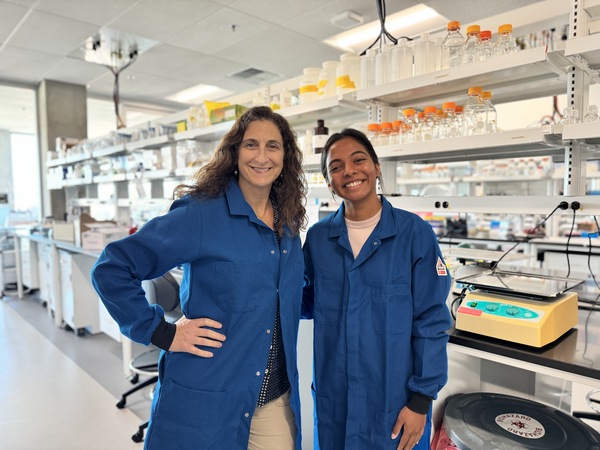
Chesler’s lab specializes in studying how sex hormones affect the heart.
Though many more women get diagnosed with pulmonary arterial hypertension than men, the outcomes for women are better than men. Chesler believes this may be due to increased levels of estrogen which could be promoting the lung disease yet protecting the heart at the same time.
“Estrogen is a very potent signal in the body in all sorts of ways,” said Chesler. She believes studying estrogen could provide insights into how to prevent heart disease in men and older women.
Her lab recently discovered that in mice, contractility of the heart varies with the estrous cycle, the rodent equivalent of the menstrual cycle. Also, in a rat model of heart failure with preserved ejection fraction (HFpEF), the most common cause of heart failure, heart function was better in females with their ovaries intact compared to those with their ovaries removed.
Women rarely get heart disease during their reproductive period, which is assumed to be due to normal estrogen cycling. After menopause, women are diagnosed with HFpEF more than men, so her lab is trying to find where the protective mechanisms of estrogen lie so they can be mimicked to help prevent heart failure. “If we can find a protective pathway through which estrogen acts, it could be available to both men and women,” Chesler said.
Cutting-edge Technology Provides Unprecedented Insight into Heart Health
Her lab uses computational modeling that simulates how animal hearts, human hearts and pulmonary vascular behave under various conditions. “Since we've moved into computational modeling, it's just been an absolutely enormous amount of fun,” said Chesler. She has used this computer simulation to study how the heart and lungs are affected by premature birth and is hoping to use these simulations to suggest subject-specific care and treatments.
Chesler is also well known for the breadth of her studies: her focus on the right ventricle and the pulmonary vasculature, and her use of human data, large animal data, small animal data, in vitro studies and computational models. “I’ve found a way to have each of these studies inform the other,” said Chesler. Her lab is using these different modalities to understand heart health and disease in general.
She is also researching the relationship between estrogen, obesity and the heart, and Chesler is not stopping there. Next, she wants next to study how psychosocial stress affects heart function to better understand gender and racial disparities in cardiovascular health in this country. “I think it’s going to be just as exciting as the estrogen story,” Chesler said.
- Natalie Tso
(Listen to 6-minute episode of The Lab Beat podcast featuring Naomi Chesler and her lab)
