
UC Irvine Researchers Awarded $3 Million to Harness AI for a Smarter Power Grid
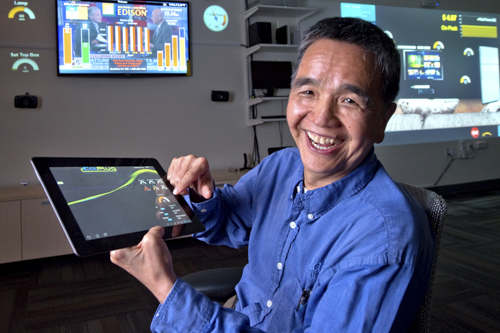
The UC Irvine-led SIGNAL project will build smarter tools to forecast energy from the solar panels, batteries and EVs that are invisible to today's grid operators.
August 24, 2026 - Researchers from the California Institute for Telecommunications and Information Technology (CALIT2) at UC Irvine have been awarded $3 million in funding from the California Energy Commission (CEC) to lead a four-year research initiative to transform how the electrical grid harmonizes with privately owned energy assets, such as rooftop solar photovoltaic (PV) systems, batteries, and electric vehicles (EVs).
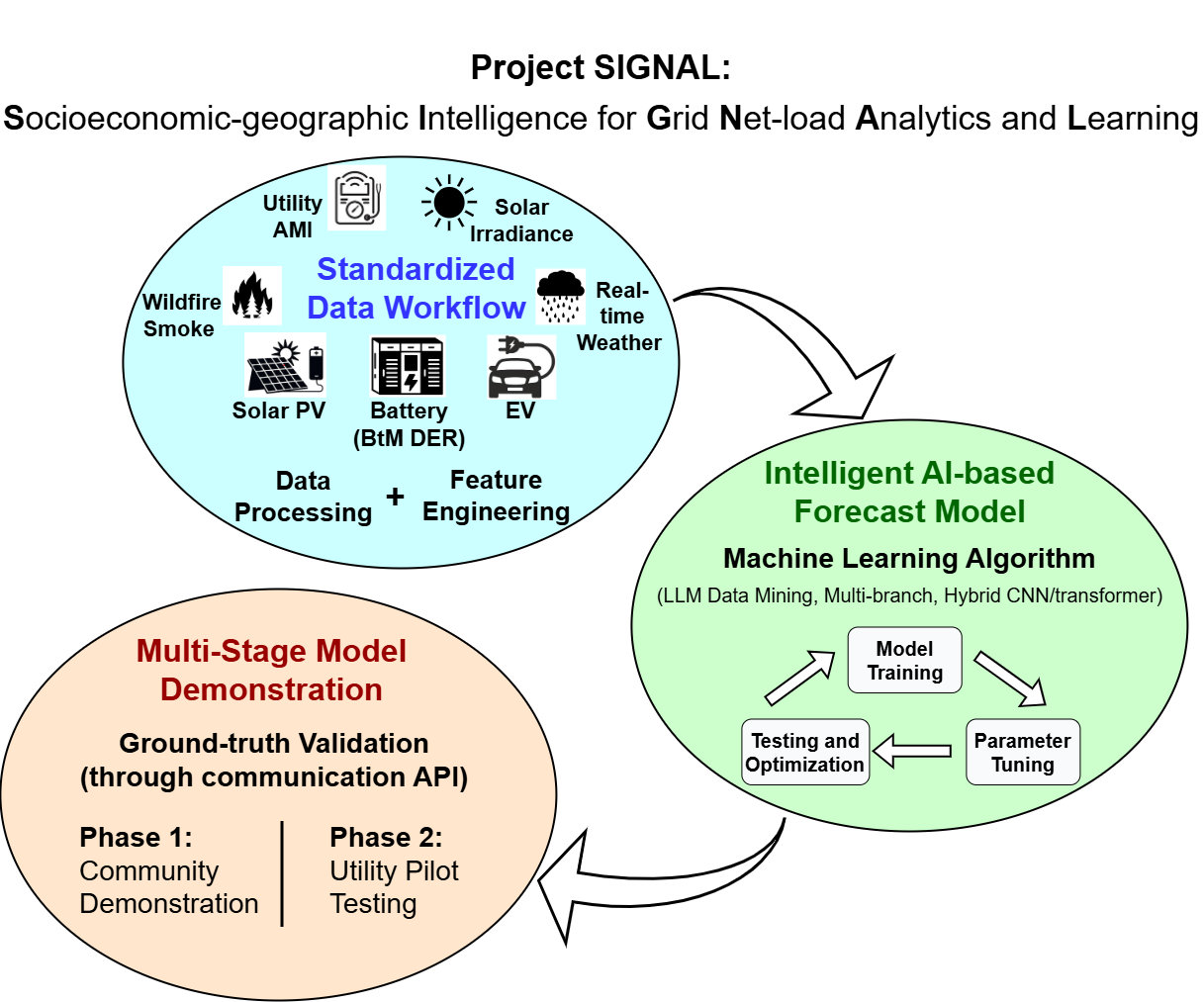
Currently, grid operators have little visibility into these energy assets, also known as Behind-the-Meter (BtM) distributed energy resources (DERs). Addressing this would allow operators to better balance energy supply and demand, avoiding outages. The project, titled Socioeconomic-geographic Intelligence for Grid Net-load Analytics and Learning or SIGNAL, will provide new cutting-edge tools to monitor the use of these resources.
“Utility operators can’t forecast in real time how much extra power your solar PVs are making, or how much energy your EV can consume or offer when you plug it in,” said Guann-Pyng (G.P.) Li, principal investigator and UCI distinguished professor of electrical engineering and computer science. “Working together with vendors of these devices, an intelligent tool would give utility companies a clearer, real-time picture of energy activity happening behind closed doors. On behalf of public interest, we want to invite various stake holders to join us in developing a holistic approach in providing high visibility of distributed energy resources for betterment of net zero grid.”
Led by Li, the project team is creating two key tools to tackle the problem:
- A standardized framework for collecting and organizing data from publicly and privately owned DER-related sources into one coherent, centralized database, built on the existing NSF National Data Platform.
- An actionable intelligence model that can use that data platform to accurately forecast how much energy these DER devices will produce or consume in the near-real-time to short-term future.
The team — which also includes assistant project scientist Shuoyu (Arnold) Wang from CALIT2, and Professors Marco Levorato and Sergio Gago-Masague from the UCI Department of Computer Science — will conduct a multi-stage model validation through a ground-truth demonstration at community partner Laguna Woods Village, and operational pilot tests at two to three utility substations. A specially developed communication tool, built by project partner Derapi, will enable communications between the end devices and grid operators to exchange data throughout the testing process.
The project will run from 2026 to 2030 and also includes Lawrence Berkeley National Laboratory, UC San Diego and Derapi, Inc. as sub-partners. Utility and community partners include Southern California Edison, the Los Angeles Department of Water and Power, San Diego Gas & Electric and Laguna Woods Village.
- Paul McQuiston
