
UC Irvine Students Study Effectiveness of Transporting Sand to the Coast by Rail
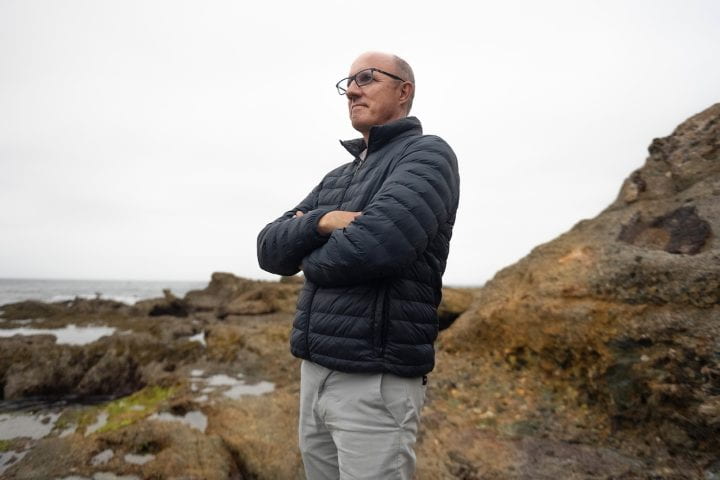
Built-up sediment at Prado Dam could supply eroded beaches in Southern California
March 9, 2026 - Southern California is confronting a coastal conundrum: There is too little sand at several of the region’s beaches, and there is too much sediment clogging inland flood prevention infrastructure. Experts are seeking an efficient and economical way move sand from one place to the other.
That’s where trains come in.
Research faculty and students at the University of California, Irvine recently took part in a workshop on the feasibility of loading railcars near Corona with sediment collected from the Prado Dam Basin and Santa Ana River and transporting it to the Orange County coast and beyond.
Held at the county administration complex in Santa Ana and organized by O.C. Board of Supervisors Vice Chair Katrina Foley, the workshop also included participants from the Orange County Water District, the O.C. Transportation Authority, O.C. Public Works, O.C. Parks and private rail company Synagro Technologies Inc.
UC Irvine was represented by Brett Sanders, Chancellor’s Professor of civil and environmental engineering, and Nicola Ulibarri, associate professor of urban planning and public policy. Several UC Irvine engineering graduate students attended the workshop as the kickoff to a four-month project convened by the Orange County Water District, in which students are tasked with examining and documenting the constraints and opportunities of the sediment-by-rail concept.
Foley started the meeting by informing invitees of the importance of sand to Orange County. She said every dollar invested in sand generates $3,000 of economic benefit to the county. Wide beaches are a magnet to tourists and local visitors and help protect vital infrastructure such as the train tracks along the coast that are used dozens of times each day by the Amtrak Pacific Surfliner, Metrolink and freight trains.
Over the past 10 years, Foley said, Orange County has replenished beaches 14 times with a total of 1.3 million cubic yards of sand. In 2013, a coalition was formed among community organizations, state and county parks, and Native American groups to study the sand problem affecting South Orange County.
“There have been lots of studies but little in the way of implementation,” Foley said. “When Dana Point Harbor was developed, there was a recommendation to invest in 23,000 to 50,000 cubic yards of sand replenishment to South County beaches per year, but it was never done.”
She said she hopes to see beach sand replenishment treated in the same way as road maintenance and added that removal of the sediment at the bottom of the Prado Dam Basin, near Corona, would be a good place to start, as it would benefit both the dam and the beaches.
Sanders, head of the UC Irvine Climate Collaboration, which is facilitating the students’ work, said that sediment has been building up in the Prado Dam Basin at the rate of about 1 million cubic yards per year since 1941, and the stockpile now sits at approximately 80 million cubic yards. There is a demand for 100,000 cubic yards of new sand per year in South Orange County, and more is likely needed farther south in San Diego County, especially in Oceanside, according to Sanders.
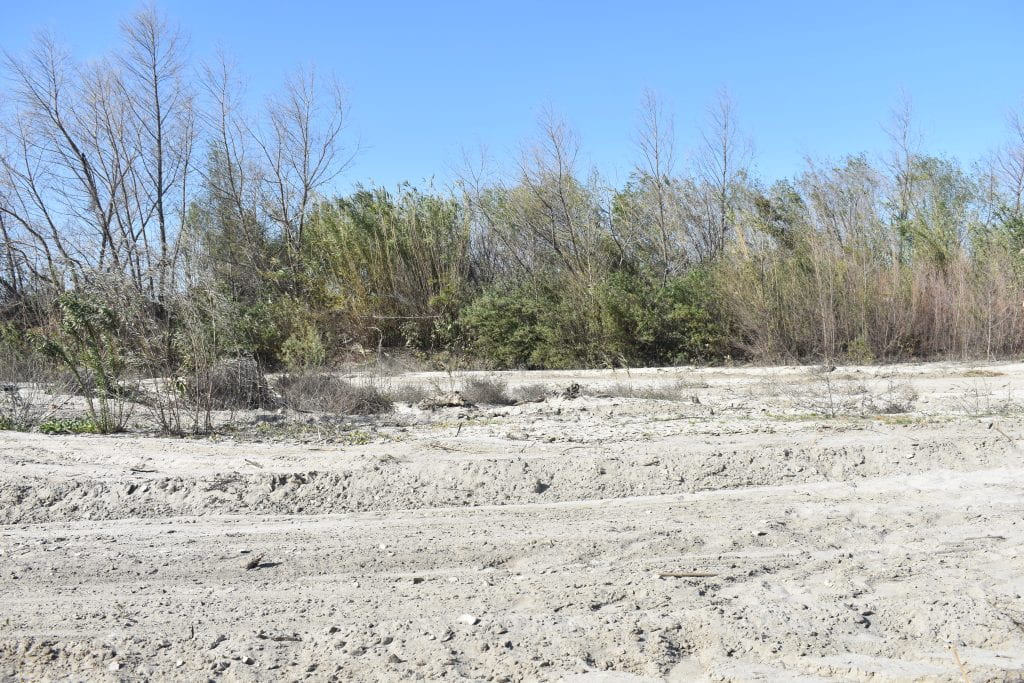
The Prado Dam, like similar infrastructure throughout Southern California, was designed to control floodwater, and the accumulation of sediment is part of that design. However, it has also been employed for decades by the Orange County Water District to capture stormwater that can later be used to recharge the Orange County Groundwater Basin, which supplies drinking water for 2.5 million people in Orange County. Over time, sediment accumulation in the Prado Dam Basin has reduced its capacity to capture stormwater and replenish groundwater. The removal of sediment would restore that capacity.
In the workshop, the Orange County Water District’s board President Denis Bilodeau, a UC Irvine-trained civil engineer, said, “Sediment used to be thought of as waste, but we now view it as a valuable natural resource.”
He pointed to his colleague Lisa Haney, executive director of planning and natural resources at the Orange County Water District, who developed a computer application to reduce transportation distances and costs by connecting organizations with sediment with those that need it. “We like to call it a dating app for dirt,” Bilodeau said.
UC Irvine students are a valuable part of the sediment-by-rail assessment, he said, because they have the time and focus to look across the watershed, not just one site, and the capacity to test ideas that utilities don’t always have the time to explore deeply. Bilodeau added: “As students, it’s your time to shine and show us creative solutions to sediment. Not every idea will work, but that’s OK, because it’s through your research that we’ll discover if sediment-by-rail is viable.”
Sanders said that there have been little to no sediment removal and transport functions built into Southern California’s century-old pieces of flood prevention infrastructure and that the use of trucks to move sediment to beaches is costly and adds to the congestion of both highways and local roadways. Rail transport has the potential for lower costs and lower environmental impacts, but it requires that there be well-designed loading and unloading infrastructure, which adds to costs.
In addition to rail-to-beach, Sanders advocates a return to natural sediment transport via streams and rivers, so long as environmental factors – such as habitats for fish, birds and other wildlife – are considered.
“Water features which exist now as hardened concrete drainage channels behind chain-link fences can be reimagined as green amenities for neighborhoods and local economies,” he said. “With restoration, flood channels can perform an environmental service of filtering and recharging groundwater while offering neighborhood benefits such as hiking and biking trails and places for people to escape hard urban environments.”
Sanders said that the main focus of the workshop was managing sediment in a better way – and that the follow-on study by students under his mentorship in the UC Irvine Climate Collaboration will focus on that as well.
“Many people have identified rail as a promising solution, but it has proven tricky to implement,” he said. “The loading, unloading and rail network all present constraints, and building awareness of all these constraints is why we came together in this workshop.”
Students will also explore ways to distribute the sand once it’s at the coast. Is it best to deposit the material directly onto the beach, or should it go farther out in the water – so-called near-shore placement – so ocean waves can distribute it naturally?
“Students will study disruptions to existing rail functions, cost issues and environmental concerns,” Sanders said. “They are going to get a list of constraints and ask the question: Is cost-effective rail transport of sediment a myth or a reality? I think we can answer that question in a few months when the students are finished with their study.”
The Santa Ana workshop and the ongoing student group analysis crystalize the essence of the UC Irvine Climate Collaboration’s mission, he noted. The organization has taken cues from community leaders – in this case, experts from the Orange County Water District – and provided funding and support for graduate students and postdoctoral scholars to create a body of knowledge that can be trusted.
“This has the potential to become a trailblazing model for regional collaboration in Southern California,” Sanders said.
– Brian Bell
