
Engineering+ Sustainability Institute to Focus on Critical Materials
March, 2, 2026 - UCI Samueli School of Engineering Interim Dean Faryar Jabarri has announced that the new Engineering+ Sustainability Institute will focus on the sustainable processing of critical materials. The institute will reinvent the materials supply chain, closing the loop between sourcing, production, utilization and recycling.
Securing reliable access to energy, food and shelter is a national priority central to economic prosperity and security. Achieving this stability requires a commitment to sustainability and decarbonization. Yet the technologies enabling a low-carbon future depend on fragile and geopolitically exposed supply chains for critical and near-critical materials. These vulnerabilities extend beyond clean-energy systems to foundational sectors such as ammonia production, essential for fertilizers and hydrogen carriers, and cement manufacturing, fundamental to shelter and infrastructure — both under growing pressure to decarbonize while ensuring material security.
"The new institute brings together two areas of excellence on campus — material processing and metallurgy, and electrochemistry,” Jabarri said. The seed funding for the new institute is $2.5 million for five years at $500,000 a year and is part of a $50 million gift from Henry and Susan Samueli for three Engineering+ institutes that also include Engineering+ Health and Engineering+ Society.
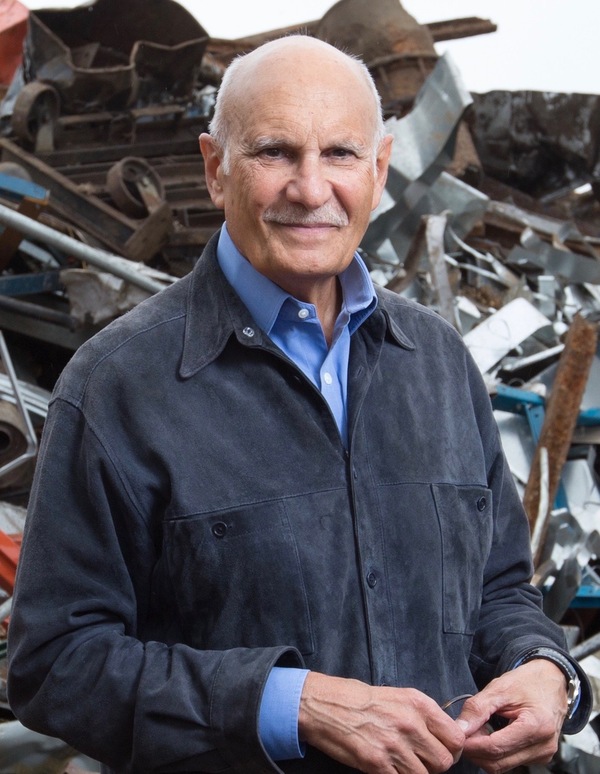
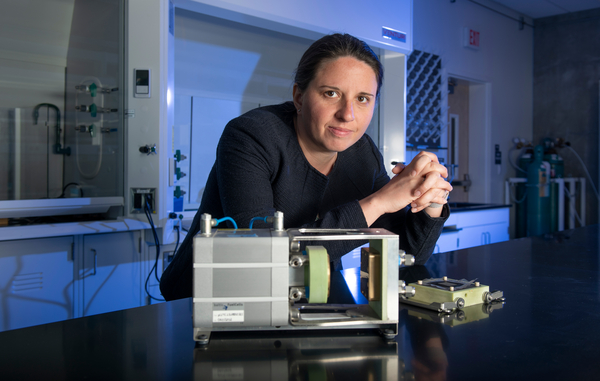
The institute will be led by co-directors Iryna Zenyuk and Diran Apelian. Zenyuk is the director of the National Fuel Cell Research Center and a global leader in electrochemical technologies while Apelian is a world leading metallurgist and the director of the Advanced Casting Research Center (ACRC) and the Pratt & Whitney Center of Excellence. Both Zenyuk and Apelian have worked extensively with industry, and their work spans from discovery to commercialization.
The institute will focus on three thrusts: critical materials (rare earths and near critical materials), food security (sustainable ammonia), and sustainable shelter (cement and infrastructure materials). The work of the institute will be structured around two efforts: extraction, recovery and reuse of critical/near-critical materials; and reduction of process-based emissions from manufacturing of commodity materials such as ammonia and cement.
"We envision opportunities to innovate extractive chemistry vectors for waste valorization, layered with electrochemistry as well as novel alternatives for ore metallization and purification,” said Apelian. “In brief, we will create value from waste streams through recovery and purification technologies."
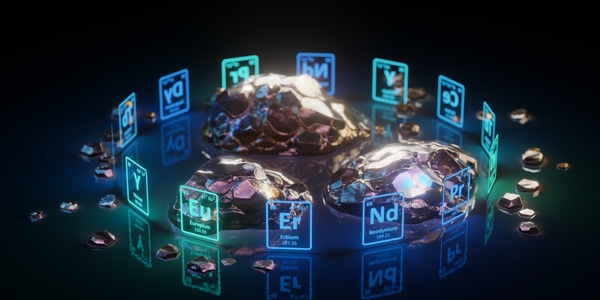
The work in rare earth elements (REEs) will aim to secure a domestic REE supply chain by promoting the development of low-energy extraction processes to recover REEs from secondary waste streams. The goal is to develop technology for the extraction, separation, metallization and refining of these minerals.
Critical and near-critical elements like lithium, nickel and copper are vital for batteries, electric grid evolution, future nuclear reactors and ammonia production. These materials face the same supply challenges as REEs, with demand for some projected to grow fivefold in the next decade. As current methods struggle with efficient separation from dilute sources, the institute will develop novel material separation techniques, such as electrochemical separation and concentration methods.
Ammonia is indispensable for global food security, yet the process of ammonia synthesis is dominated by the high-temperature, high-pressure Haber-Bosch method, which is heavily reliant on fossil fuels. The institute will further develop and scale-up current efforts in producing low-pressure/low-temperature “green” ammonia.
In infrastructure materials and cement, the institute will work on engineering innovations in each stage of processing. These include replacing conventional mining with electrochemical recycling of existing materials, advancing low-carbon cement production, developing robotics-enabled 3D printing and modular assembly for efficient construction, and extending infrastructure life through climate-responsive and self-healing materials. It will also extend end-of-life through electrochemical reclamation of recycled concrete – a vastly available material currently with limited reuse pathways and immense disposal burden. Zenyuk and UCI Professor Mo Li have developed technologies to help decarbonize the cement industry, which has attracted the interest of global cement manufacturing companies.
Zenyuk and Apelian have gathered a strong team to address the sustainability challenge, these include senior UCI faculty Mo Li, Plamen Atanassov, Vojislav Stamenkovic, Lorenzo Valdevit, Dele Ogunseitan and industrial liaison Sahag Voskian. Critical partners have been identified to carry out the various missions of the institute, and the institute’s leadership is committed to have establishing a sustainable business model.
“This institute brings together UCI’s expertise in materials processing and electrochemistry to address sustainability challenges of national importance,” said Zenyuk. “By focusing on rare earth elements, ammonia and cement, we are targeting problems where UCI can lead — and where advances can translate into scalable, federally supported solutions.”
- Natalie Tso
