
CEE Seminar: Engineering at the Nano-bio Interface for Environmental Sustainability
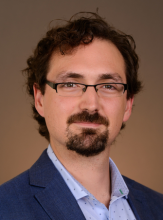
Associate Professor
School of Sustainable Engineering and the Built Environment
Ira A. Fulton Schools of Engineering
Arizona State University
Abstract: The ability to engineer materials at the nanoscale opens new opportunities to integrate them into technologies for increased performance. In particular, understanding how materials interact with biological systems is critical to not only enable their application in many environmental processes, but also to predict their potential risk once found as contaminants in the environment. In this seminar, I will discuss the recent efforts of my group on understanding how materials interact with organisms from two perspectives. First, the use of nanomaterials to enable low-fouling or self-cleaning surfaces will be presented. Material selection will be discussed based on a safe-by-design framework, with specific examples on how to tailor carbon materials for enhanced performance and reduced risk. Then, an emerging type of particulate contaminants, microplastics, will be presented. The effect of environmental weathering on microplastics will be shown, with an emphasis on how changes in the surface chemistry affects the way plastic surfaces interact with contaminants. Finally, I will discuss the implications of the findings presented and how the knowledge acquired in can be leveraged to enable new environmental applications.
Bio: François Perreault is an associate professor in the School of Sustainable Engineering and the Built Environment at Arizona State University. He completed his doctorate in environmental sciences at the University of Quebec in Montreal and was an NSERC postdoctoral fellow in the Department of Chemical and Environmental Engineering at Yale University. His research, which was recognized by the Emerging Investigator Award of the Sustainable Nanotechnology Organization and twice by the Quentin Mees Award from the Arizona Water Association, explores the interface between materials and biological systems, with a focus on nanotechnology, microplastics and membrane separation. He currently serves as a co-thrust leader for the fouling and scaling control thrust in the NSF-funded Nanotechnology-Enabled Water Treatment Engineering Research Center.
Share

Upcoming Events
-
CBE 298 Seminar: Coffee as a Platform for Experiential Chemical Engineering Education: From Qualitative Design to Quantitative Analysis
-
EECS Seminar: Printed Electronic Skin for Robots and Interactive Systems
-
MSE 298 Seminar: Illuminating Microstructure-Dependent Binding and Delivery of Nucleic Acids via Gradient Copolymerization and Field Flow Fractionation
-
MSE 298 Seminar: Illuminating Microstructure-Dependent Binding and Delivery of Nucleic Acids via Gradient Copolymerization and Field Flow Fractionation