
MSE Seminar (Zoom): Manipulating Chiral Textures in Ferroic Oxides
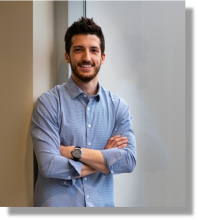
President's Postdoctoral Fellow and Ford Foundation Postdoctoral Fellow
Department of Materials Science and Engineering
UC Berkeley
Zoom: https://uci.zoom.us/j/94185752952?pwd=bmZoeFo0VkdGa2owd2dPZVltTWwvUT09, meeting ID: 941 8575 2952 passcode: 172118
Abstract: Excitations in ferroic materials, such as domain walls and skyrmions, provide a rich playground for studying intriguing physical phenomena such as chirality, magnetic dynamics, spin-orbit coupling and magnetoelectric coupling. Additionally, these excitations hold vast technological potential. Domain walls and skyrmions, which can be nucleated, annihilated and translated by currents, provide a promising approach to encode bits of information for next-generation memory and logic. One technological and scientific challenge is to stabilize small spin textures and manipulate them efficiently with high velocities. This is critical for dense, power efficient and fast memory and logic. However, in ferromagnetic materials, current-driven spin texture dynamics face an intrinsic “speed limit” and room-temperature-stable magnetic skyrmions are an order of magnitude too large to be useful in any competitive technologies. Furthermore, the energy requirements for current-driven manipulation of magnetism are orders-of-magnitude too large for practical devices. Here, by synthesizing and engineering new classes of chiral magnetic materials and emergent magneto-electric materials, we overcome these fundamental limitations plaguing traditional spintronic systems. Specifically, by using a combination of epitaxial growth techniques, interface design, and magnetic sublattice engineering, we stabilize 10 nm skyrmion bits at room temperature, drive magnetic domain walls to velocities over 4,300 m/s, and demonstrate low-power control of magnetoelectric chiral textures. Moreover, by using advanced electrical and optical techniques (and developing new ones), we show that these systems provide a new platform to study complex fundamental phenomena like topology, inversion symmetry and even relativistic dynamics.
Bio: Lucas Caretta is a President’s Postdoctoral Fellow and a Ford Foundation Postdoctoral Fellow at UC Berkeley working with Professor Ramamoorthy Ramesh. Caretta completed his Ph.D. in materials science and engineering in 2019 at the Massachusetts Institute of Technology as an NSF graduate student fellow under the supervision of Professor Geoffrey Beach. There, he made significant contributions to the understanding of domain wall dynamics in compensated systems. Caretta’s current research focuses on manipulating and engineering spin and charge at the atomic scale through the development of advanced synthesis and in-operando characterization techniques.
Share

Related Content
| Attachment | Size |
|---|---|
| 411.26 KB |
Upcoming Events
-
CBE 298 Seminar: Coffee as a Platform for Experiential Chemical Engineering Education: From Qualitative Design to Quantitative Analysis
-
EECS Seminar: Printed Electronic Skin for Robots and Interactive Systems
-
MSE 298 Seminar: Illuminating Microstructure-Dependent Binding and Delivery of Nucleic Acids via Gradient Copolymerization and Field Flow Fractionation
-
MSE 298 Seminar: Illuminating Microstructure-Dependent Binding and Delivery of Nucleic Acids via Gradient Copolymerization and Field Flow Fractionation