
CEE Seminar: Scenario Earthquake-based Risk Assessment - A Case Study
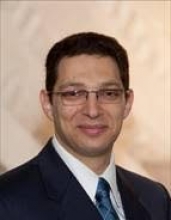
Senior Staff Engineer
Simpson Gumpertz & Heger
Abstract: This presentation illustrates the application of a proposed scenario earthquake-based approach for seismic probabilistic risk assessment (SPRA) and compares it to traditional SPRA. The proposed methodology and case study was originally developed for a nuclear power plant (NPP) application but can be generically applied to SPRA in the broader context of performance-based earthquake engineering. Traditional SPRA uses a relatively limited number of acceleration time histories that are matched to a uniform hazard spectrum. The structure response and capacity probability distributions are combined to construct seismic fragilities of the structures and contents. Seismic fragilities can be constructed for multiple damage states and corresponding consequences. The individual fragilities are convolved with the hazard to compute the annual rates of sustaining systemwide damage states and expected annualized losses. This presentation focuses on one structure fragility that is synonymous with severe damage or collapse of a main safety-related building.
Bio: Mohamed Talaat has 12 years of experience as a structural engineer and seven years as a researcher at UC Berkeley and Cairo University, Egypt. His primary expertise is seismic probabilistic risk assessment (SPRA) of nuclear power plants; in addition to performance-based earthquake engineering, failure investigation, and seismic design and retrofit. Talaat has performed extensive seismic response analysis, walkdowns and fragility evaluations of existing and proposed structures and components at the Mühleberg NPP in Switzerland and at several U.S. plants. He is currently managing the seismic walkdown and fragility scope of the Columbia Generating Station SPRA and is involved in developing and evaluating next-generation SPRA methodologies for the Idaho National Laboratory and the Electric Power Research Institute. Talaat developed the numerical tools for computer simulation of progressive collapse in the Pacific Earthquake Engineering Research (PEER) Center software OpenSEES. He has taught at UC Berkeley and Cairo University and is active in teaching and SPRA training. He is a registered structural engineer in the state of California.
Share

Upcoming Events
-
CBE 298 Seminar: Coffee as a Platform for Experiential Chemical Engineering Education: From Qualitative Design to Quantitative Analysis
-
EECS Seminar: Printed Electronic Skin for Robots and Interactive Systems
-
MSE 298 Seminar: Illuminating Microstructure-Dependent Binding and Delivery of Nucleic Acids via Gradient Copolymerization and Field Flow Fractionation
-
MSE 298 Seminar: Illuminating Microstructure-Dependent Binding and Delivery of Nucleic Acids via Gradient Copolymerization and Field Flow Fractionation