
ChEMS Seminar: Self-Assembly of Nanoparticle Surfactants and Their Use as Theranostic Agents
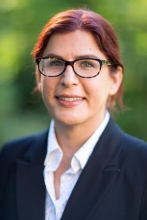
Biography: Controlling the assembly of nanoparticle building blocks is of great interest because ‘emergent’ properties arise that can enable new applications in energy, imaging and medicine. Self-assembly has long been demonstrated a viable approach to drive bottom-up organization in amphiphilic systems including molecular surfactants and block-copolymers. In this talk, I will discuss progress made in our group towards the synthesis of nanoparticle surfactants that also self-assemble and cluster into ‘colloidal-molecules’ with controllable morphology. A scalable synthesis method was developed by tuning steric stabilization imparted by grafted hydrophilic polymers and short-ranged attractive interactions from small molecule ligands. The phase behavior of nanoparticle surfactants has been explored in detail and found to mimic that of molecular surfactants. Cluster formation is analogous to micelle formation and nanoparticle surfactants also stabilize oil-water and air-water interfaces. The close arrangement of metallic particles in clusters and emulsions induce changes in optical absorption and local electric fields due to surface plasmon resonance. Specifically, near infrared (NIR) absorption is greatly enhanced in nano-Pickering emulsions. This enables the use of these materials as powerful non-linear contrast agents for photoacoustic imaging and for mechanical thrombolysis. Self-assembly of surfactant nanoparticles represents a powerful platform to form diverse nanostructures and colloidal materials with novel properties.
Biography: Professor Pozzo’s research interests are in the area of soft materials and nanotechnology. Her group focuses on controlling and manipulating self-assembly and on developing structure-function relationships for a variety of nano-structured materials having applications in health, alternative energy and separations. Pozzo obtained her B.S. from the University of Puerto Rico at Mayagüez and her Ph.D. in chemical engineering from Carnegie Mellon University in Pittsburgh PA. She also worked in the NIST Center for Neutron Research as a post-doctoral fellow and is currently an associate professor of chemical engineering at the University of Washington where she has served since 2007. In addition to research, she is also dedicated to improving chemical engineering undergraduate education with curriculum reform and laboratory course development.
Share

Upcoming Events
-
CBE 298 Seminar: Coffee as a Platform for Experiential Chemical Engineering Education: From Qualitative Design to Quantitative Analysis
-
EECS Seminar: Printed Electronic Skin for Robots and Interactive Systems
-
MSE 298 Seminar: Illuminating Microstructure-Dependent Binding and Delivery of Nucleic Acids via Gradient Copolymerization and Field Flow Fractionation
-
MSE 298 Seminar: Illuminating Microstructure-Dependent Binding and Delivery of Nucleic Acids via Gradient Copolymerization and Field Flow Fractionation